Stuck in Wonderland
Stuck in Wonderland
By Ruby Smalheiser
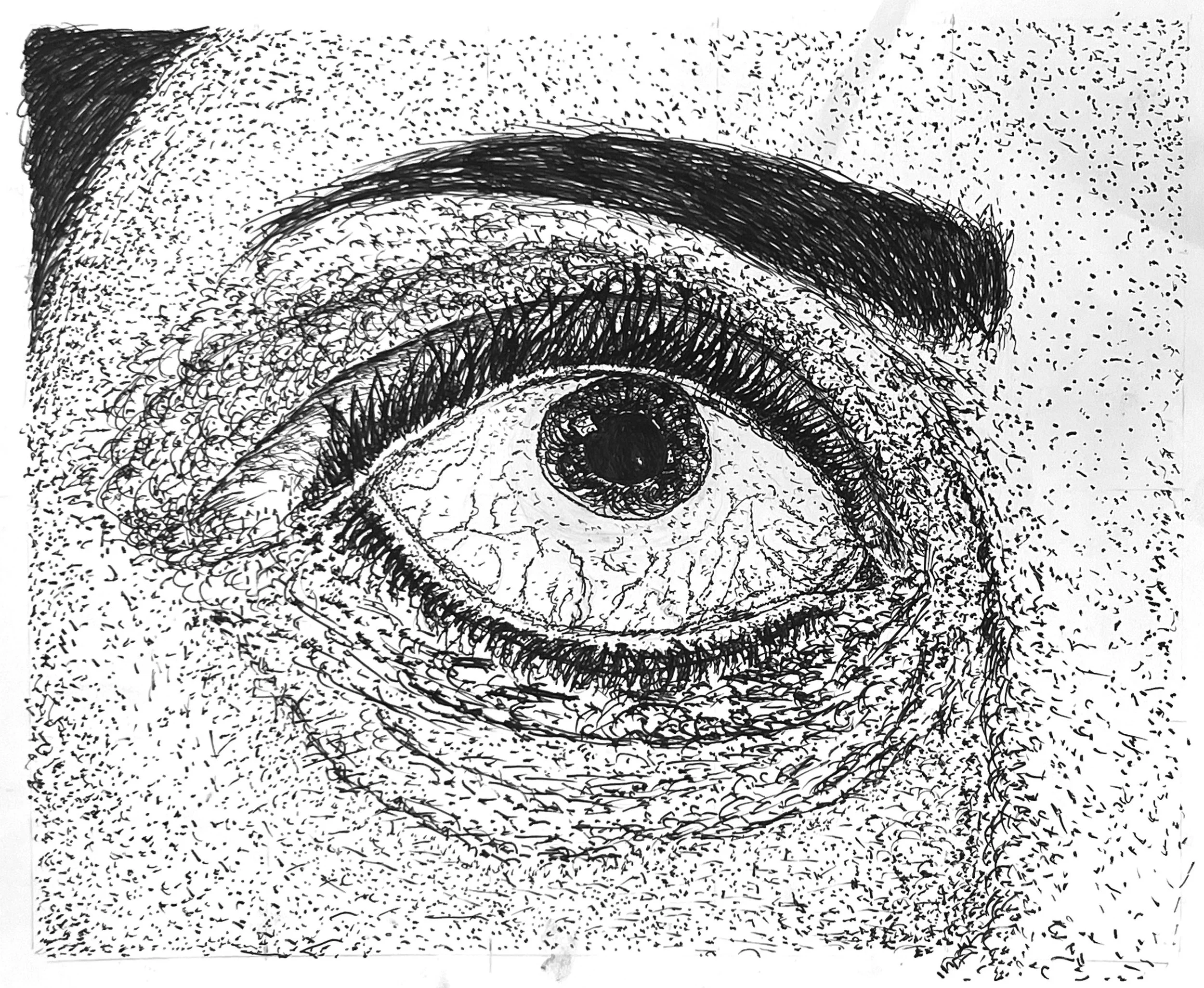
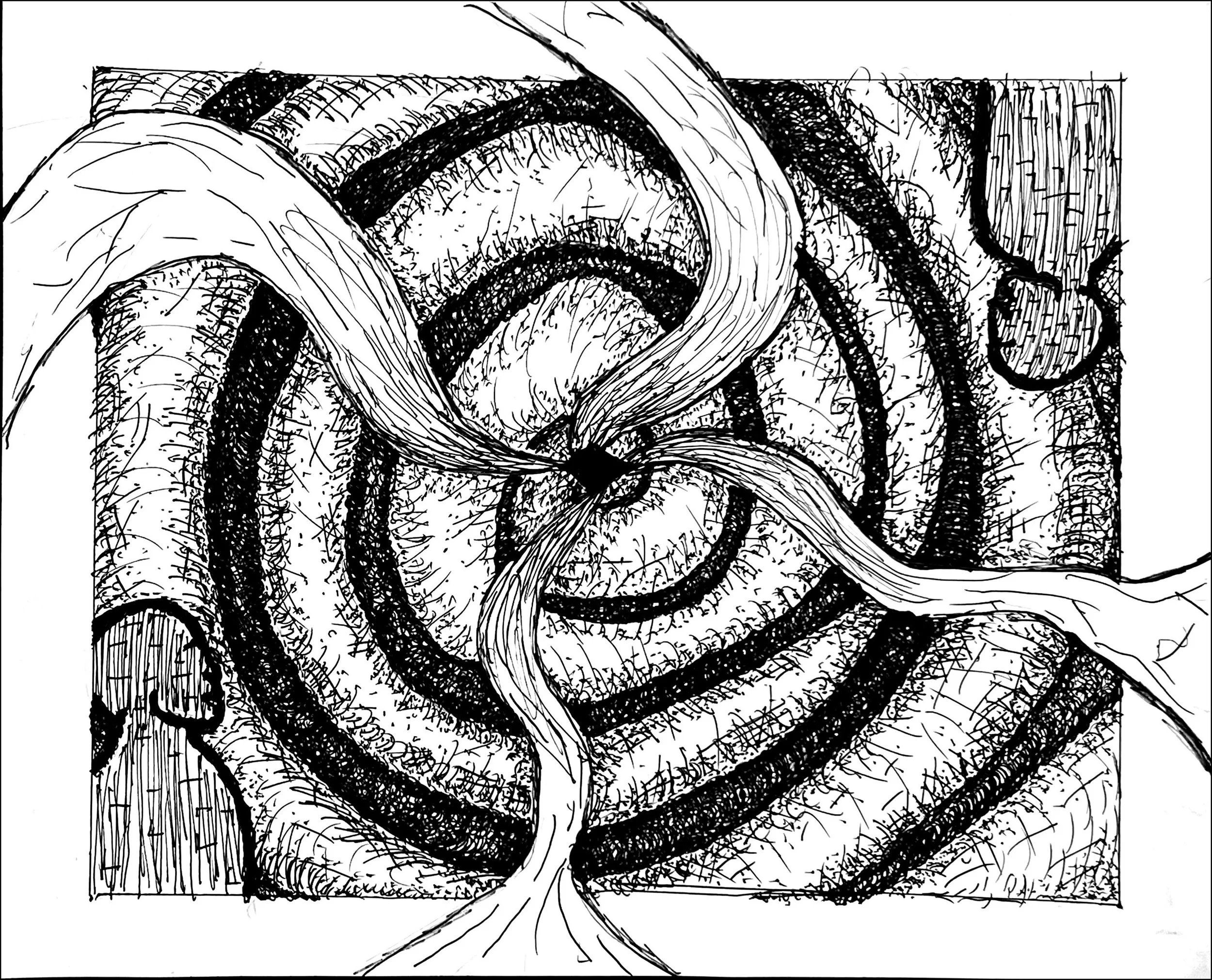
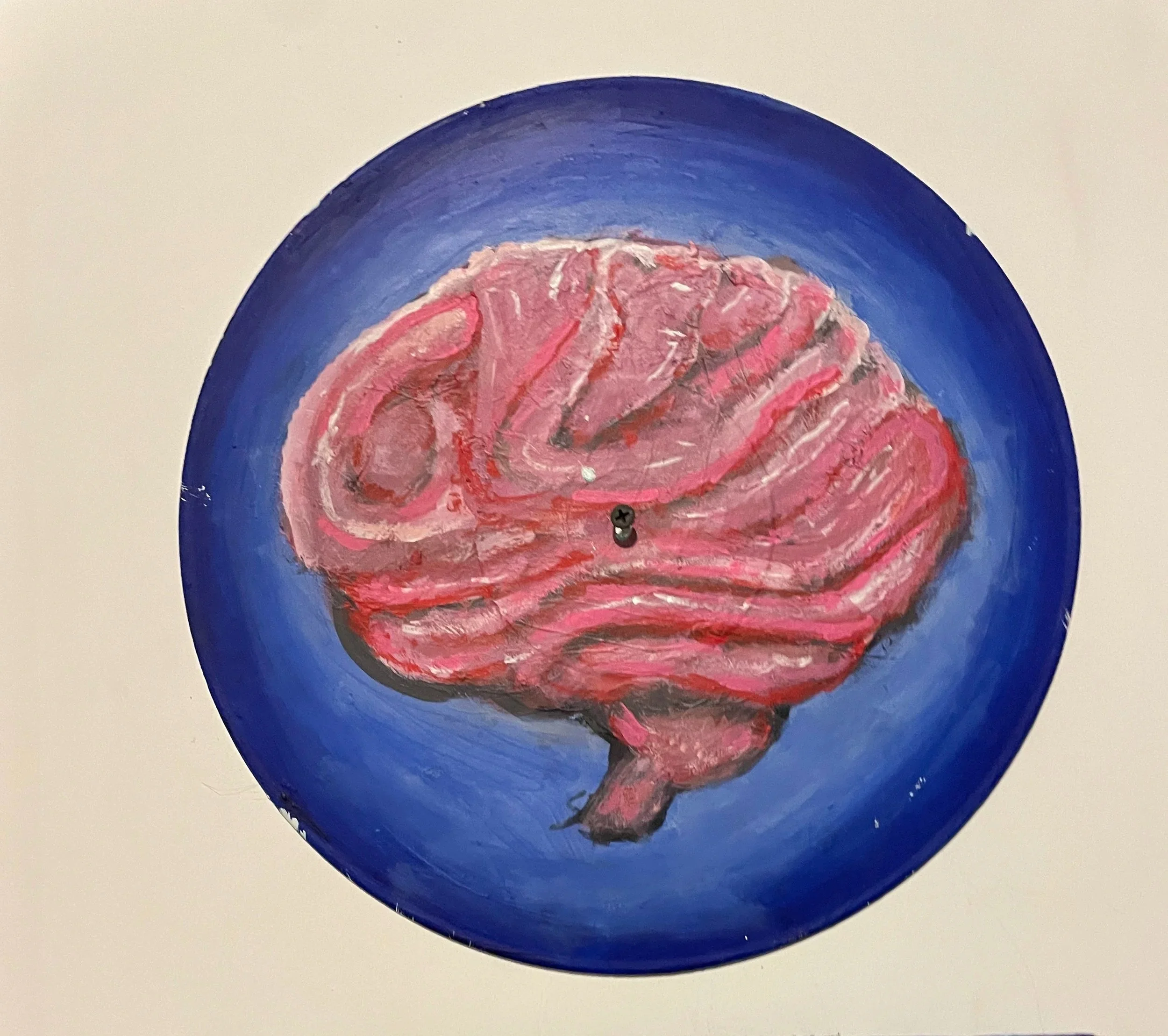
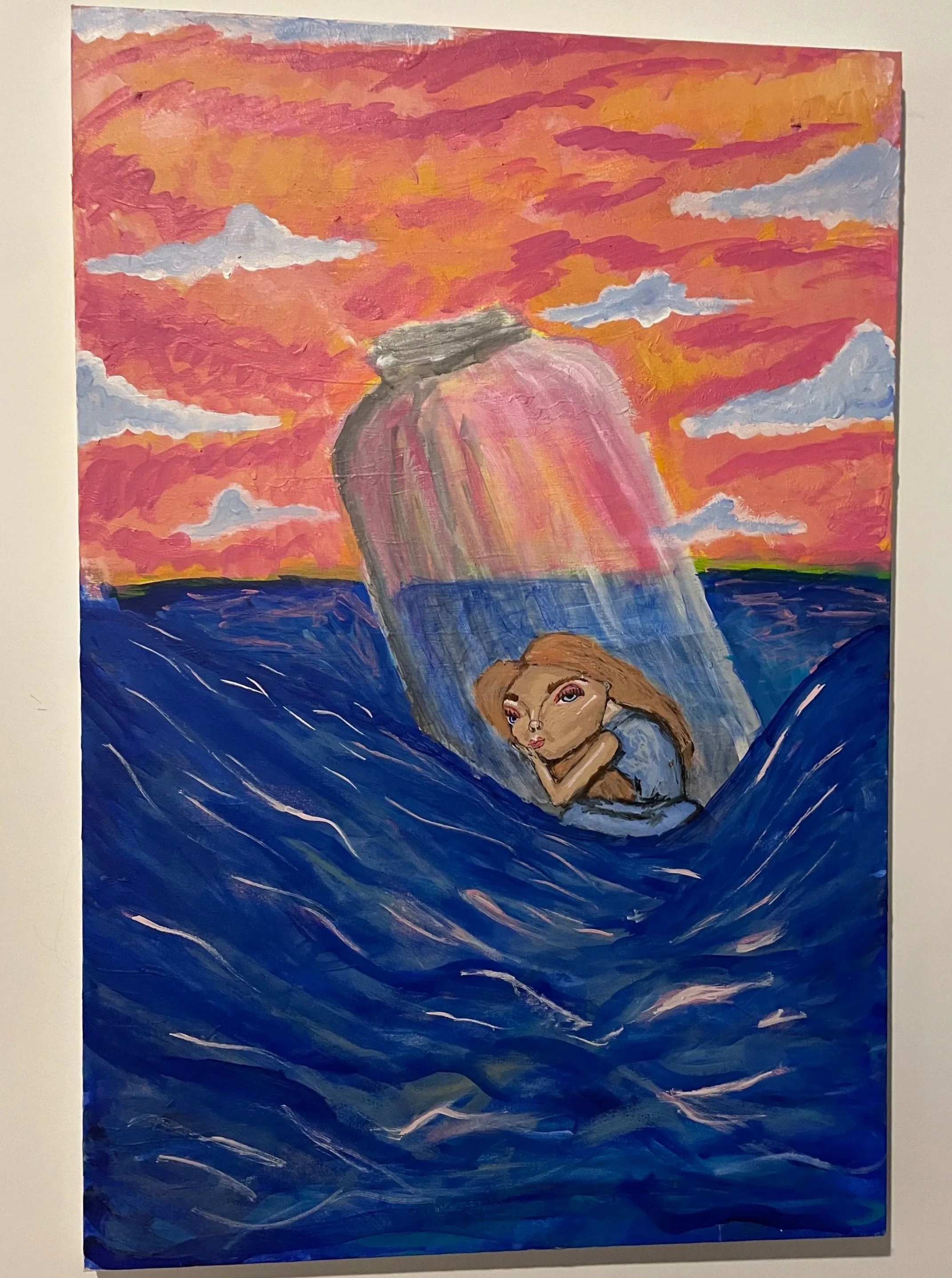
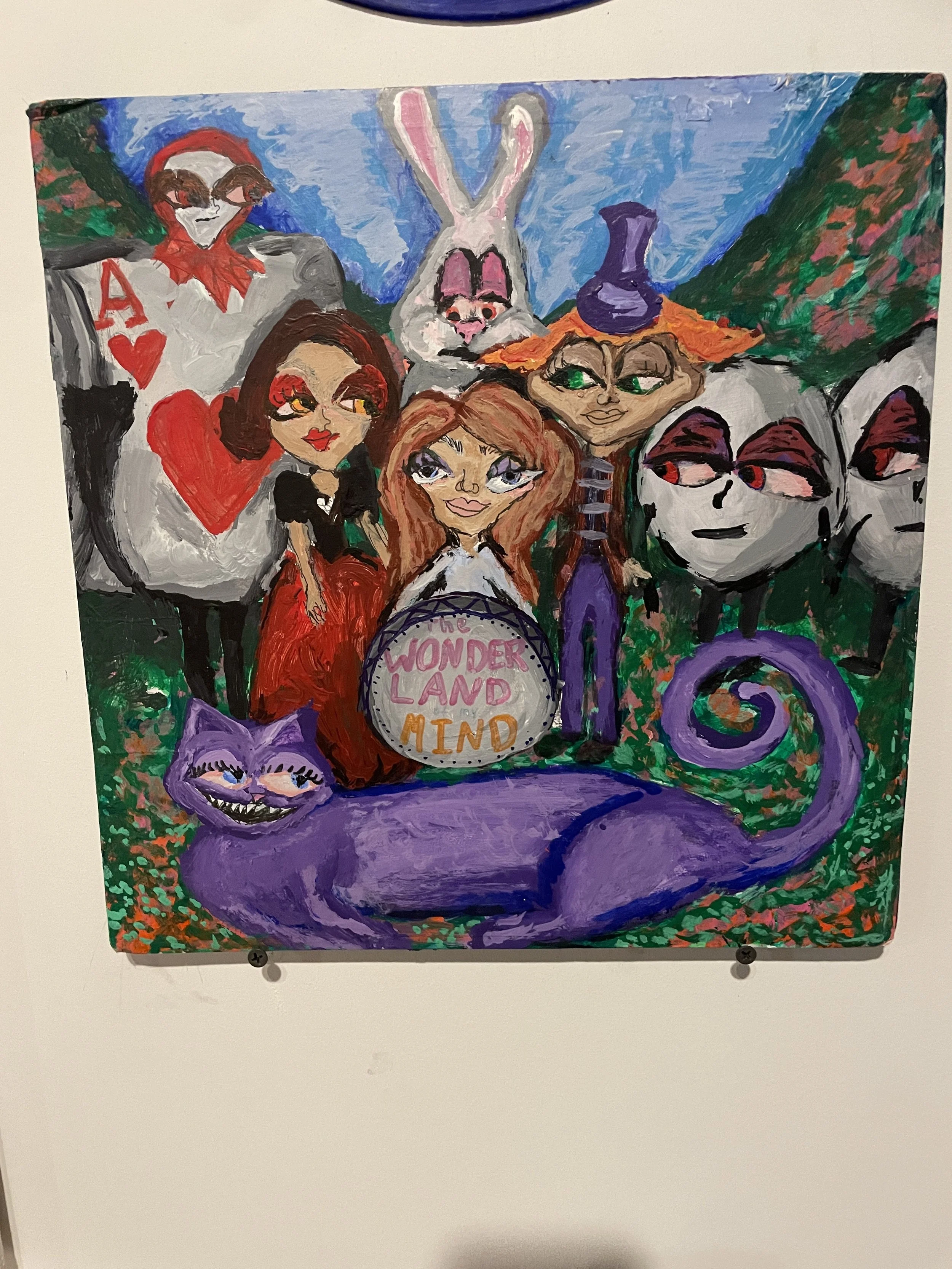
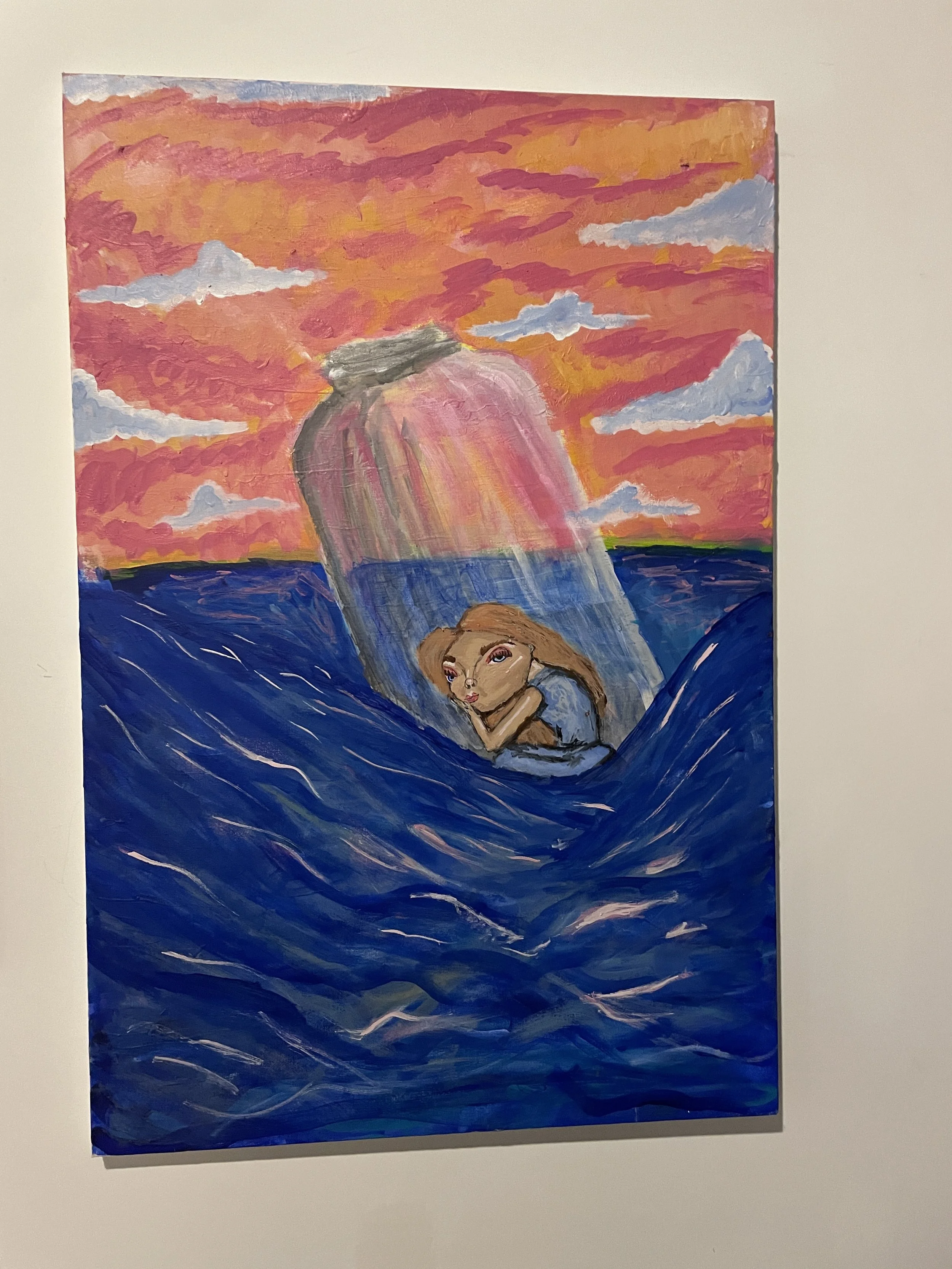
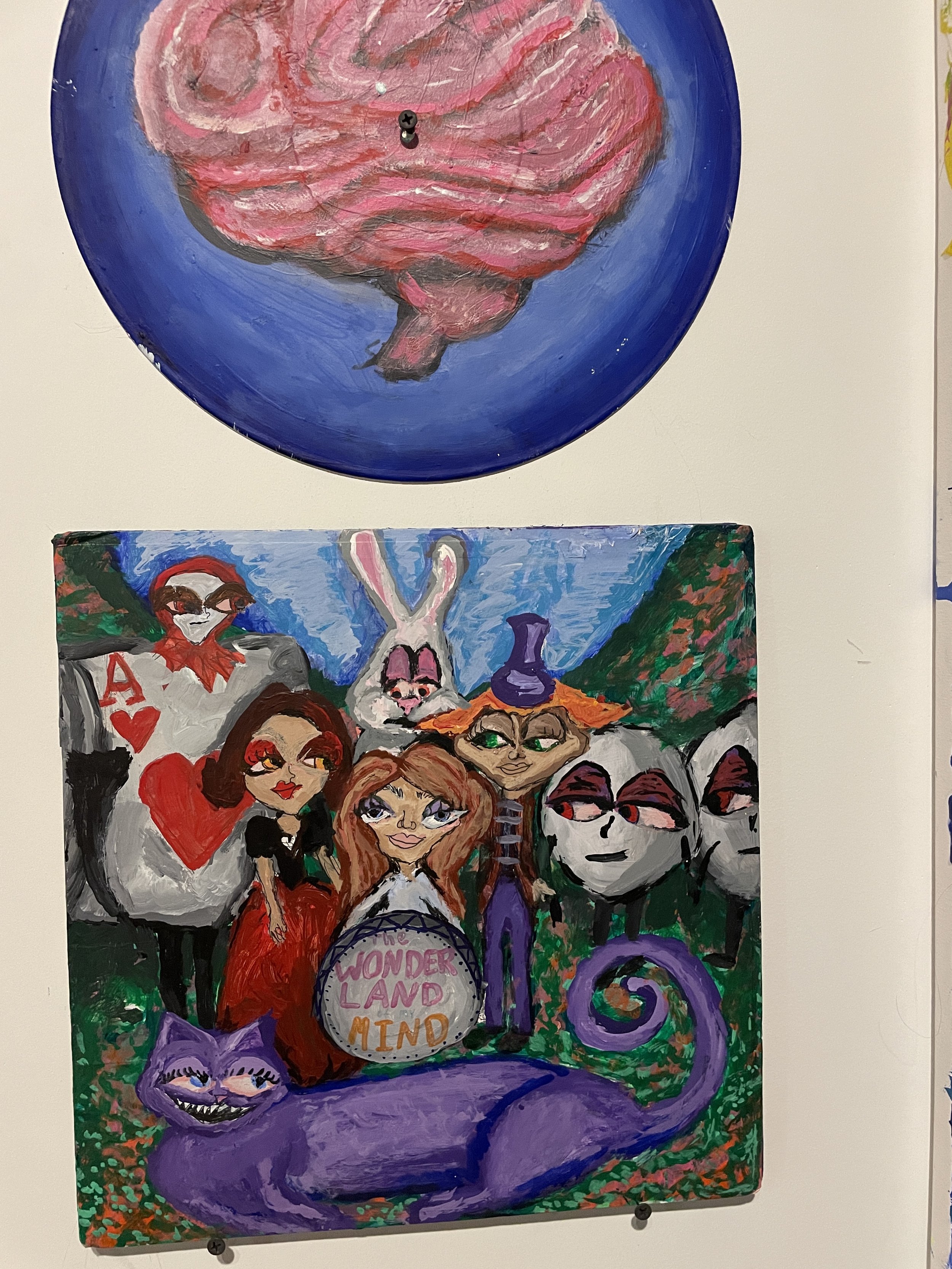
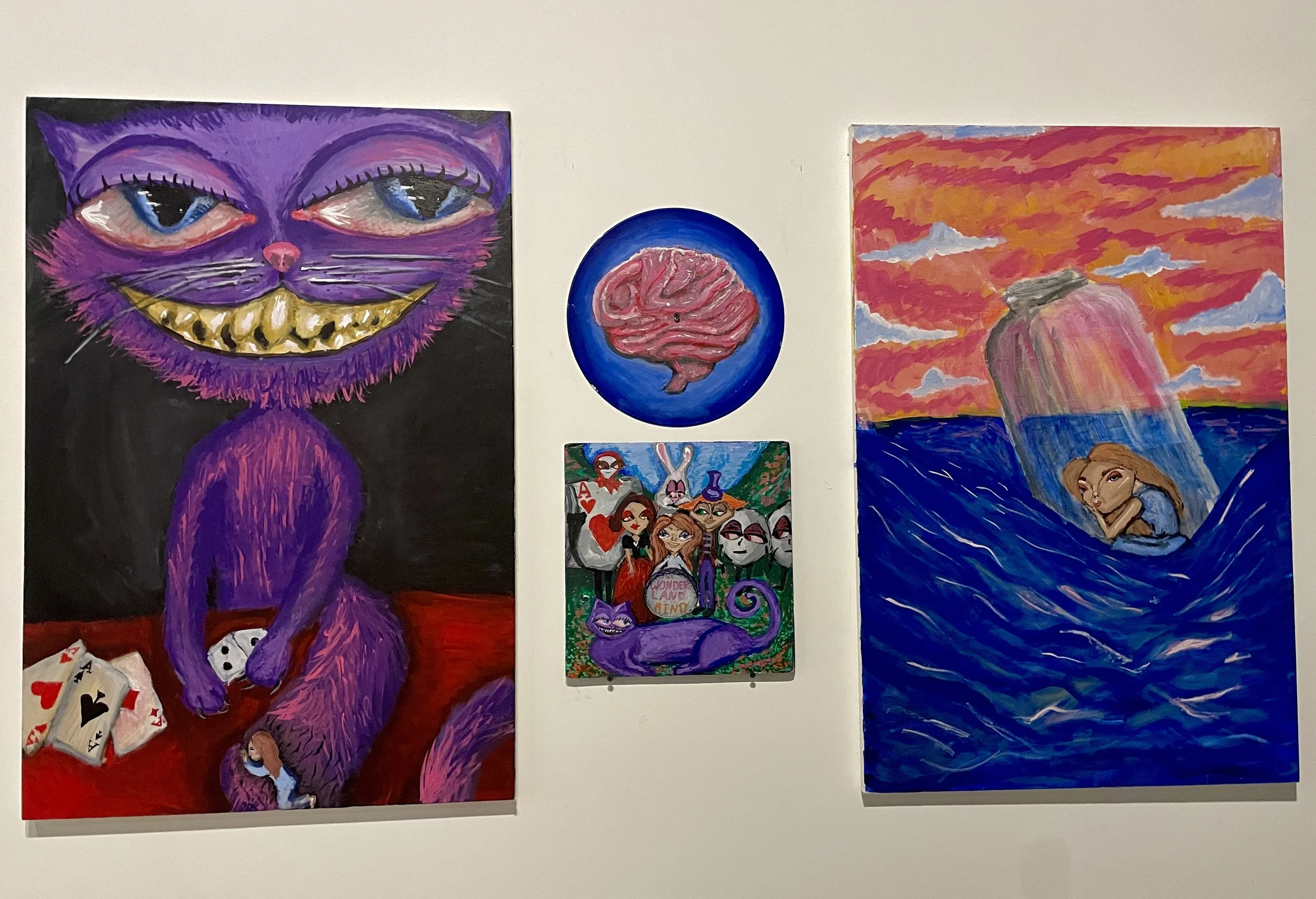
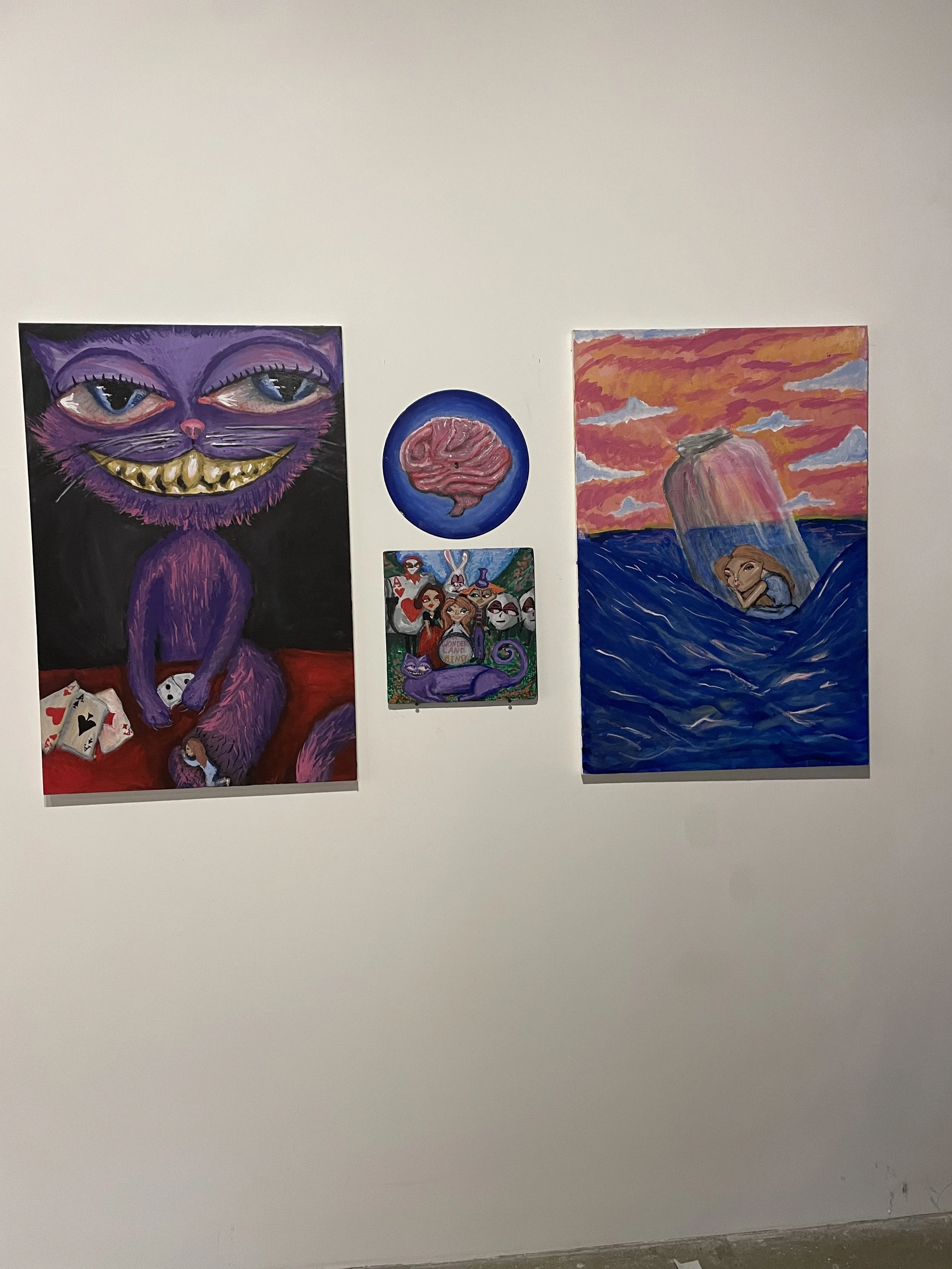
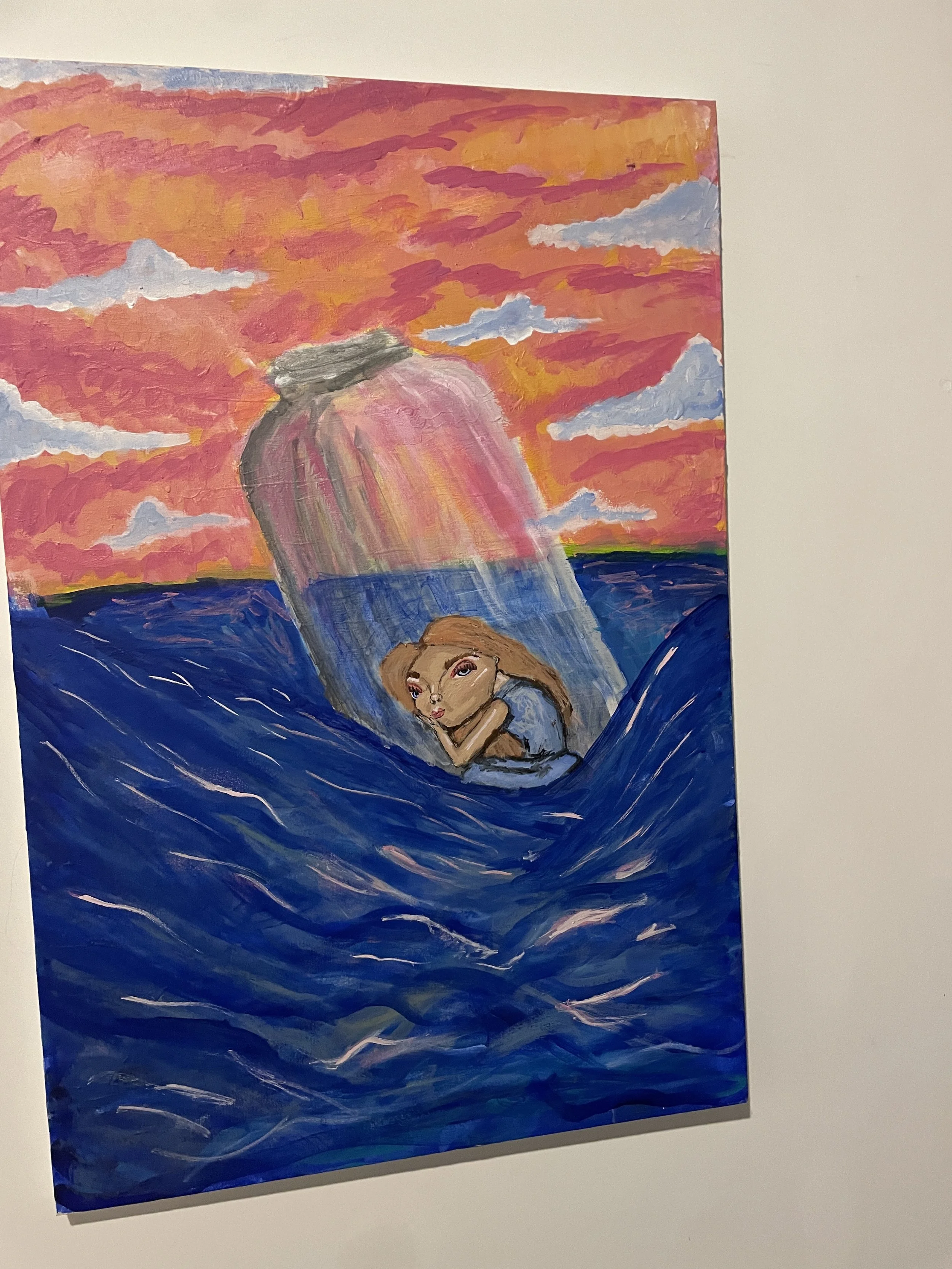
The series Stuck in Wonderland explores the emotional and psychological experience of dissociation, specifically, what it feels like to retreat into your mind and become untethered from reality. These works are bright, chaotic, and full of cartoon-like characters, drawing heavily on the whimsical yet eerie world of Alice in Wonderland. The series visualizes that in-between space where the real world fades and a fantasy takes over—one that can feel comforting and terrifying all at once. It's a dream world, but you can't always wake up immediately.
The inspiration for these pieces comes from personal moments of mental disconnection—times when disappearing into an imagined world felt like both a survival tactic and a trap. That feeling of being stuck, like in a lucid dream where you know none of it is real but can't pull yourself out, is central to the work. It expresses how dissociation can be seductive in its escape, but also isolating and disorienting.
Visually, the series is rooted in the aesthetics of pop surrealism and characterism. There's a deliberate contrast between playful, colorful imagery and the deeper, sometimes darker, emotional tones beneath. Artists like Takashi Murakami have been a major influence—particularly his 2015 piece The 500 Arhats, which layers vibrant, cheerful visuals over more serious, reflective themes. That tension between what's seen on the surface and what's felt underneath became a key approach in developing this series. The characters and environments may feel familiar—almost nostalgic—but there's always something slightly off, echoing how dissociation can distort even the most recognizable parts of reality.
Another big influence is Kenny Scharf, especially his 1984 piece When the Worlds Collide. Scharf's use of chaotic compositions, alien-like characters, and messy, over-the-top energy helped shape the tone of this series. His ability to make a piece feel simultaneously fun and overwhelming resonated with how overstimulation and mental clutter can feel when you're lost in your own head. In a similar way, Stuck in Wonderland uses dense, layered visuals to create a sense of being mentally "stuck"—where it's hard to tell where one thought ends and another begins.
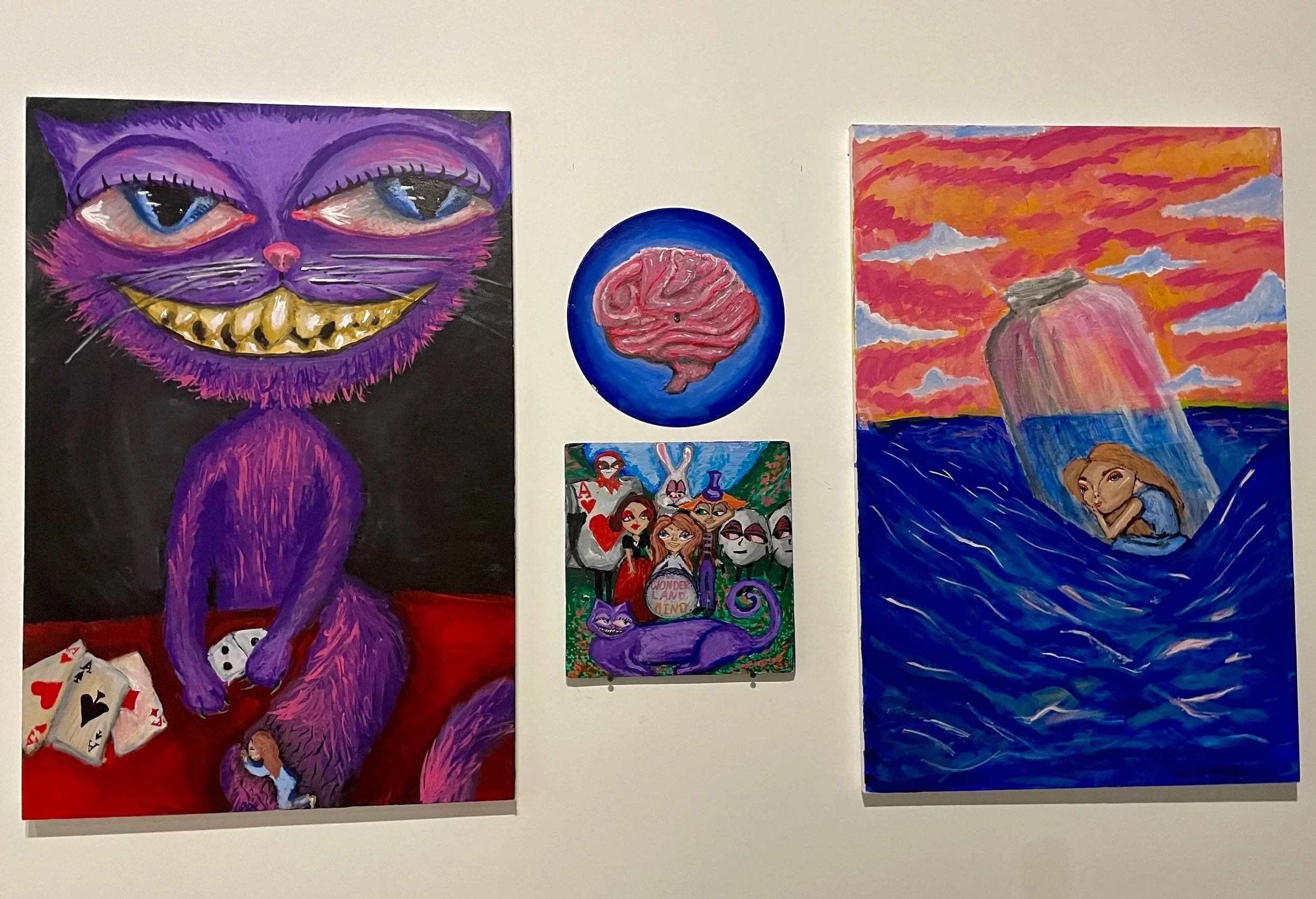
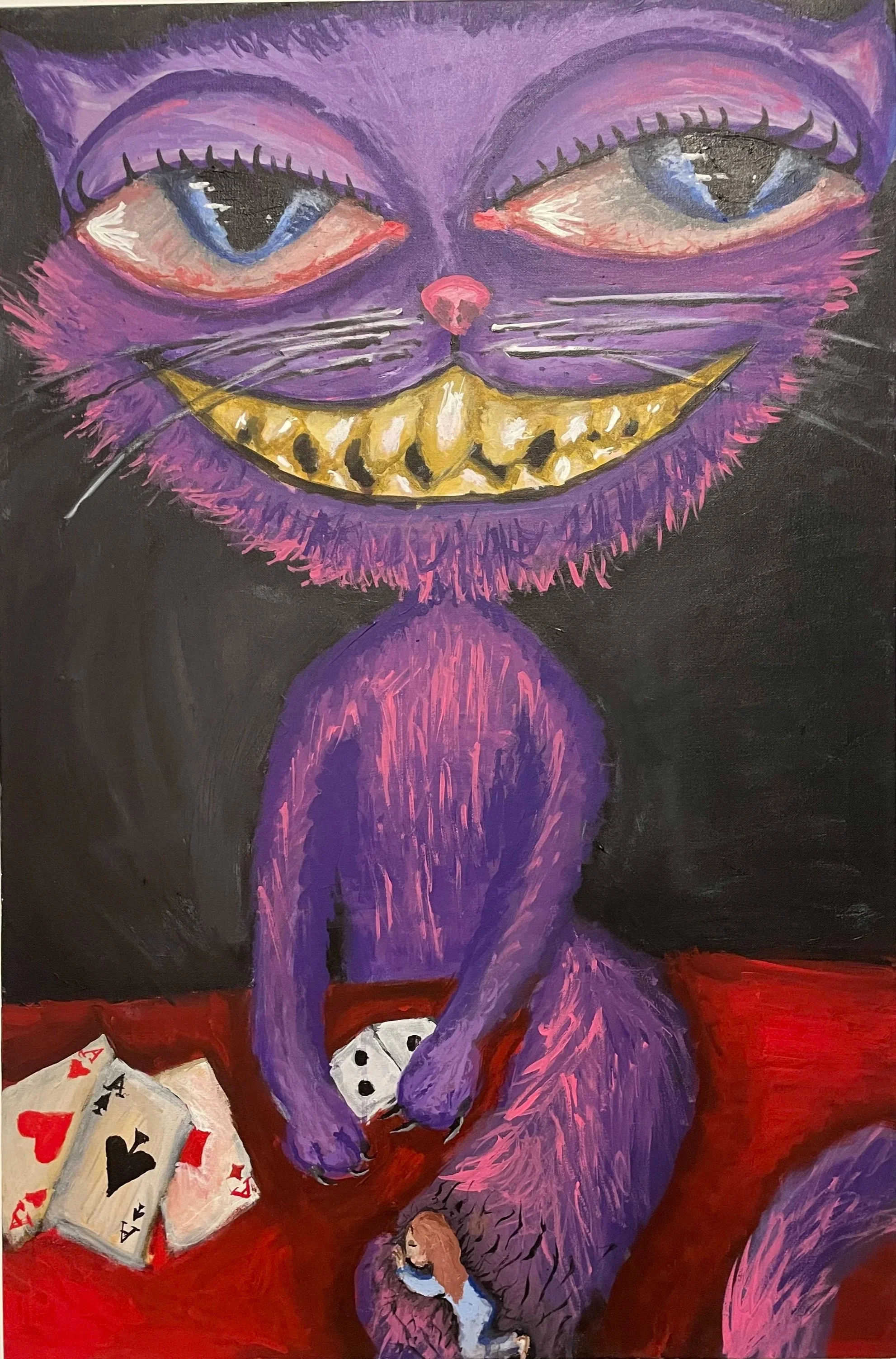
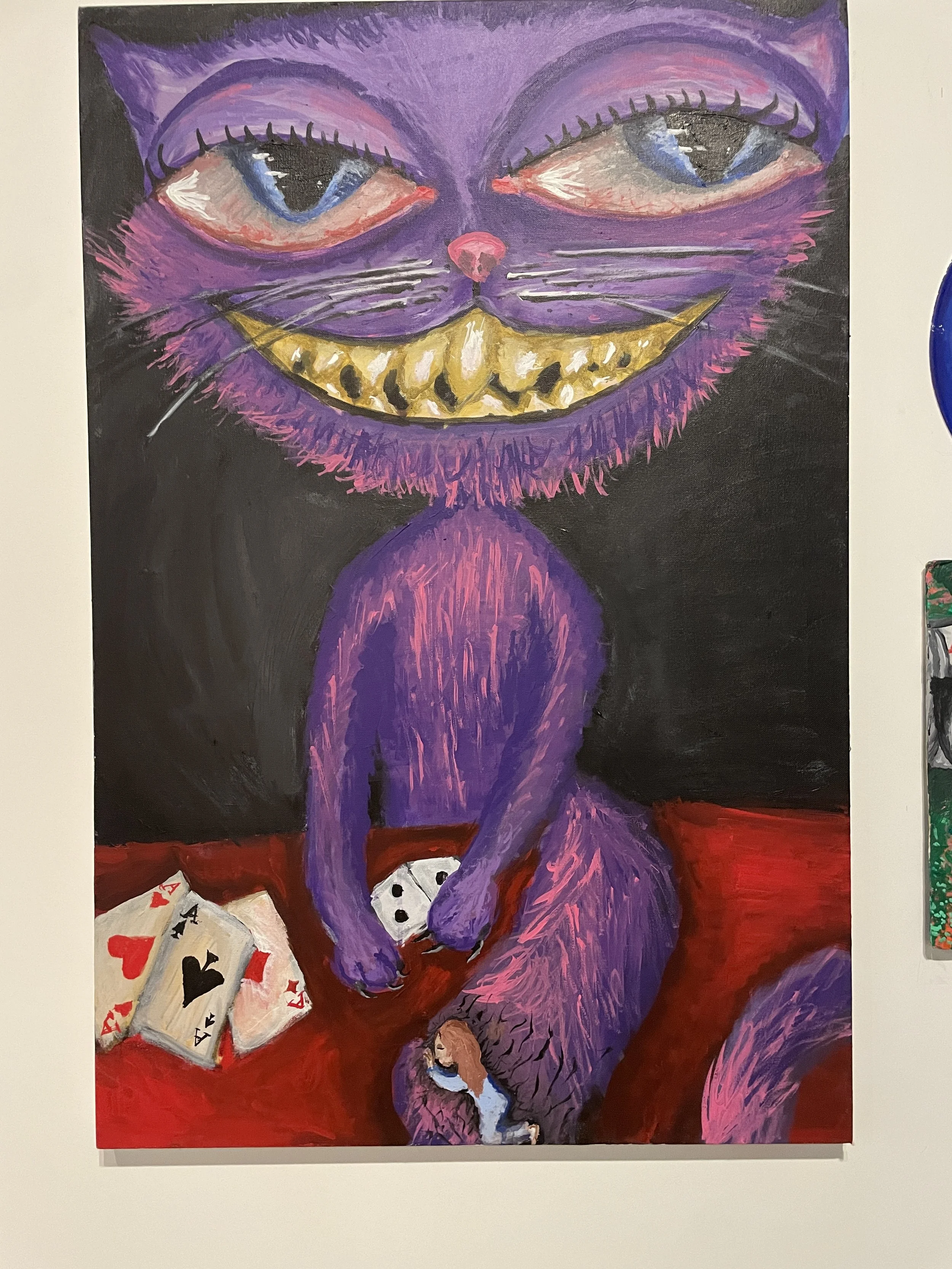
A recurring figure throughout the series is a cat, clearly inspired by the Cheshire Cat. It appears again and again, smiling, sometimes comforting, sometimes eerie. The cat represents a kind of false safety—a familiar presence that ultimately leads deeper into confusion. It embodies the voice of dissociation that says, "Stay here, it's okay," even when staying means getting more lost.
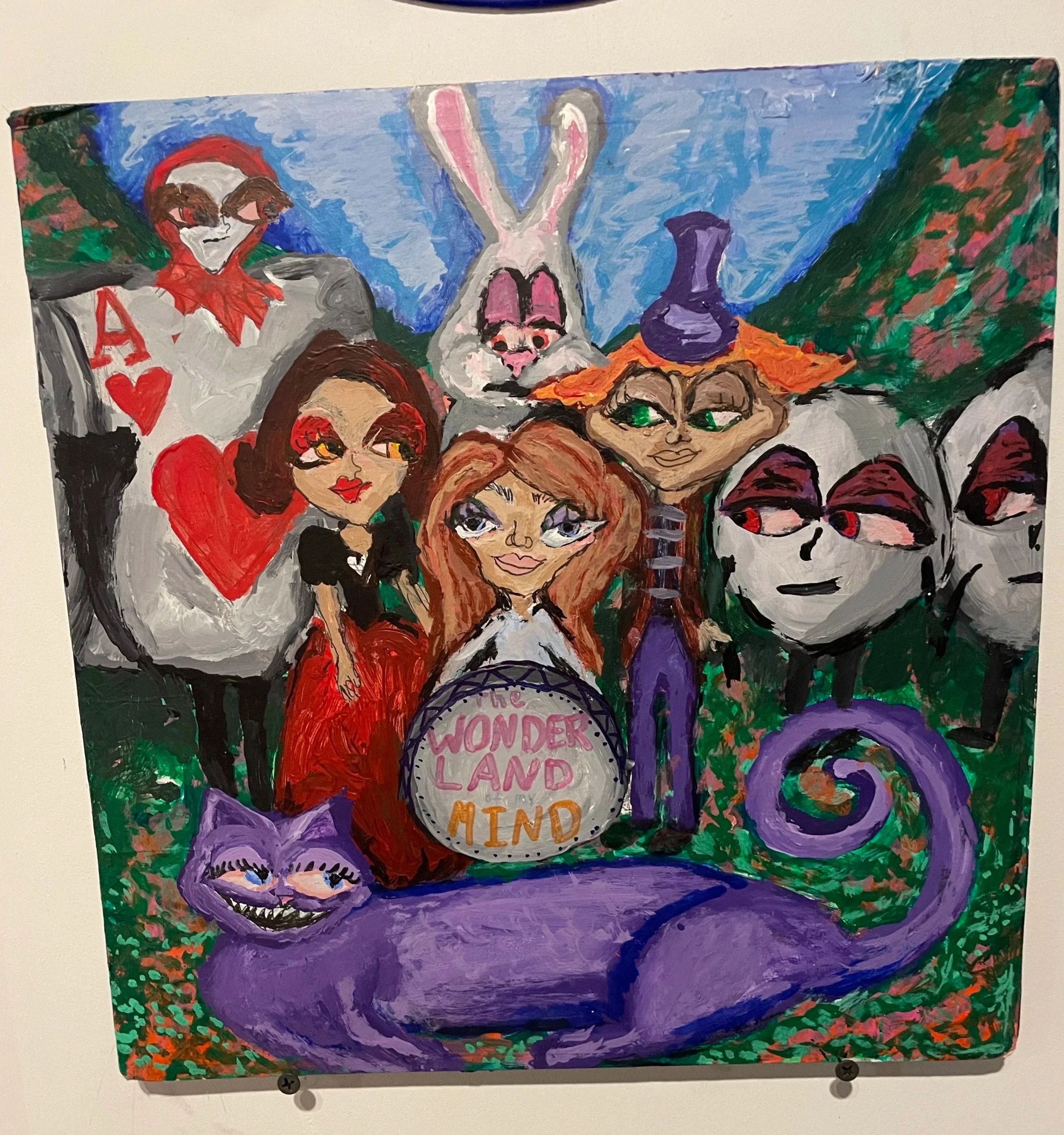
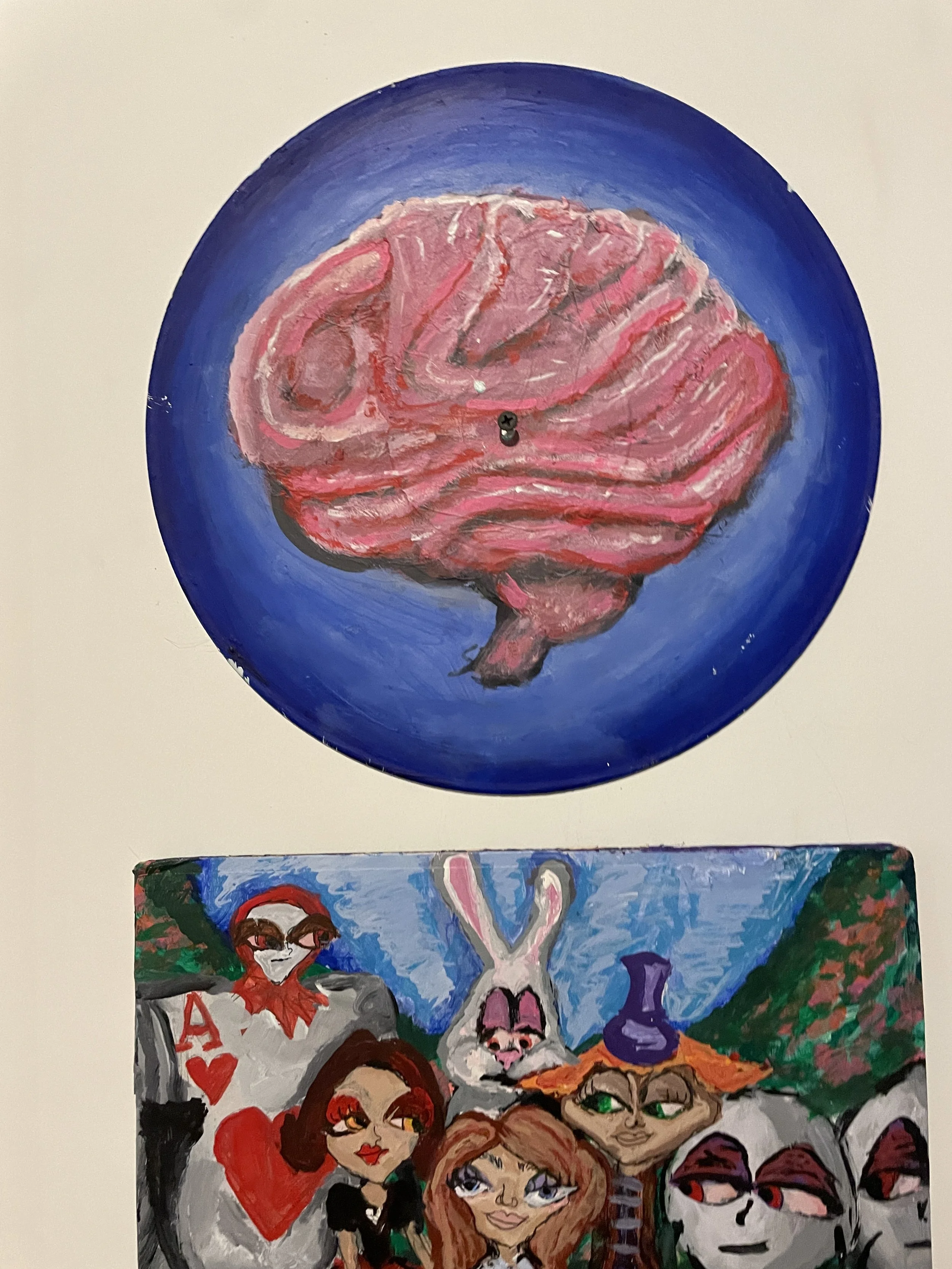
Each piece in the series captures a different moment that references Alice in Wonderland mixed with pop culture references. The girl stuck in a bottle references the sea of tears and the comfort in being stuck somewhere. The Cheshire cat gambling while a girl sleeps in its tail represents the knowledge of knowing something isn’t good for you, but it is the only consistent part of one's life. The record cover references The Beatles album, Sgt. Peppers Lonely Hearts Club compositionally as I found that song playing over and over again in the deepest moments of disassociation. A girl appears in each painting, seemingly trapped in this surreal world. There's no clear narrative, no solution offered. Instead, the work creates a liminal space, between dream and nightmare, joy and fear, reality and escape. It's not just about checking out from life, but about the emotional complexity that comes with needing that escape in the first place.